Wildflower Daisy Junk Journal Pages: A Digital Toolkit for Authentic Design
In a digital landscape often dominated by sharp vectors and flawless gradients, there is a growing counter-movement in design that seeks texture, imperfection, and the tactile feel of the physical world. This is the allure of the Wildflower Daisy Junk Journal Pages. While technically a collection of digital files, these assets function as a bridge between the raw, tactile nature of vintage ephemera and the precision required for modern graphic design and brand identity. For designers and creators, this isn't just a set of backgrounds; it is a comprehensive toolkit for establishing a specific, evocative aesthetic known widely as cottagecore or vintage botanical.
The Anatomy of the Aesthetic: Visual Characteristics and Appeal
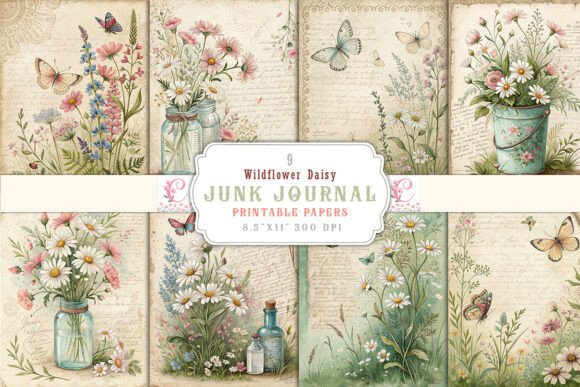
To understand the utility of this collection, one must first analyze its visual language. The Wildflower Daisy Junk Journal Pages are defined by their organic composition and earthy tonal range. We are looking at high-resolution (300 DPI) JPGs that replicate the visual weight of aged paper. The daisy motif serves as the anchor, but the "junk journal" style implies a layering of textures—faded ink, distressed edges, and botanical illustrations that mimic hand-painted watercolors.
The personality of these pages is inherently nostalgic and romantic. Unlike a clean, sterile sans serif font or a stark white canvas, these pages offer a "lived-in" warmth. The visual characteristics include:
- Texture and Grain: The files simulate the fibrous nature of vintage cardstock, providing an immediate sense of depth that flat digital colors cannot achieve.
- Organic Composition: The floral arrangements are not rigid or geometric. They follow natural growth patterns, which softens the visual experience for the viewer.
- Color Palette: Expect muted earth tones—ochres, sage greens, and dusty pinks—that evoke a rustic garden setting rather than a bright, synthetic floristry.
This aesthetic appeals to a desire for authenticity. In an era of AI-generated perfection, hand-crafted elements—simulated or real—resonate with audiences seeking genuine connection.
Strategic Applications: Beyond the Scrapbook
While the name suggests a specific use case, the versatility of the Wildflower Daisy Junk Journal Pages extends far into professional creative fields. The 8.5 x 11-inch dimensions make them immediately compatible with standard print and digital formats, but their application requires strategic thinking.
Editorial and Publishing Design
For authors and publishers in the romance, historical fiction, or wellness genres, these pages offer a ready-made solution for interior book design. They work exceptionally well as chapter headers, full-bleed background pages for poetry collections, or decorative borders for recipe books. When paired with a classic serif font, the result is a publication that feels established and authoritative yet approachable.
Digital Branding and Social Media
Content creators and small business owners can leverage these assets to build a cohesive brand identity. In the realm of social media graphics, consistency is key. Using these botanical pages as a background template for Instagram stories, Pinterest pins, or Facebook posts creates a unified grid. This is particularly effective for brands in the skincare, herbalism, or handmade goods sectors. The texture acts as a visual anchor, making a brand instantly recognizable in a scrolling feed.
Commercial Product Design
Entrepreneurs can utilize these files in packaging design. Imagine a candle brand or a tea company wrapping their products in paper derived from these high-resolution scans. The "vintage botanical" style suggests natural ingredients and artisanal quality without a single word of copy. Furthermore, for web design, these pages can be sliced and optimized to create textured sidebars, footer backgrounds, or "About Us" page overlays that break the monotony of standard corporate layouts.
The Psychology of the Print: Influence on Audience and Brand
The choice of visual assets influences how a message is received. Utilizing the Wildflower Daisy Junk Journal Pages communicates specific psychological cues to your audience. In design theory, organic shapes and natural textures are associated with safety, comfort, and growth. By integrating these elements, you soften the hard edges of commerce.
For a marketer or brand strategist, this translates to increased engagement. A newsletter background featuring these daisy pages feels less like a sales pitch and more like a letter from a friend. This subtle shift in tone can significantly impact open rates and click-throughs. The aesthetic creates a "sanctuary" feel—visual noise is reduced by the calming nature of the botanical art, allowing the viewer to focus on the content.
Moreover, the vintage style implies heritage. Even a startup can appear more established by using design assets that carry the visual weight of history. It suggests that the brand values tradition, craftsmanship, and durability—qualities highly sought after in the modern marketplace.
Practical Integration: How to Use These Assets Effectively
Adopting a strong visual style requires more than just downloading files; it requires integration. Here is how to practically implement the Wildflower Daisy Junk Journal Pages into your workflow.
- Typography Pairing: The background is busy and textured. To maintain readability, your typography must stand in contrast. Avoid overly decorative script fonts or handwritten fonts for body copy, as they will get lost in the texture. Instead, pair these backgrounds with a clean, legible modern typography choice, such as a geometric sans-serif or a sturdy slab serif. Use the decorative fonts only for large headlines where legibility is less of an issue.
- Layering for Hierarchy: In mixed media or collage projects, use these pages as the base layer. To create visual hierarchy, place semi-transparent white boxes or vellum overlays on top of the floral design to hold your text. This preserves the aesthetic while ensuring your message remains the focal point.
- Color Extraction: Use a color picker tool to extract the specific sage, ochre, and dusty pink tones found in the daisy illustrations. Use these extracted colors for your buttons, icons, and accent text elsewhere in your design. This creates a harmonious ecosystem where the background doesn't feel disconnected from the foreground elements.
Licensing and Logistics for Commercial Use
For entrepreneurs and small business owners, understanding the logistics of digital assets is crucial. As noted, these are digital downloads delivered in a ZIP folder. Before purchasing, ensure your workflow supports this format.
Regarding commercial application, these files are design assets. While they are excellent for personal memory keeping and diary writing, their value lies in their commercial potential. When using them for client work or product sales, it is vital to transform the asset. Do not simply resell the file as a standalone digital paper. Instead, integrate it into a larger design—such as a planner insert, a marketing flyer, or a product label. The asset should be a component of a new, original work.
The 300 DPI resolution ensures that these files are print-ready. You can scale them down for digital use without losing quality, but scaling up significantly beyond 8.5 x 11 inches may result in pixelation. For large-format printing, such as posters or signage, consider using the texture as a repeating pattern or a subtle accent rather than a full-bleed background.
Conclusion: Elevating the Everyday
The Wildflower Daisy Junk Journal Pages represent a shift toward warmer, more human-centric design. They offer a practical solution for anyone looking to inject personality, history, and nature into their digital and print projects. Whether you are a crafter building a handmade gift, a blogger designing a header, or a publisher laying out a book, these botanicals provide the foundational texture needed to create work that feels authentic and engaging. By treating these files not just as pictures, but as strategic design assets, you can elevate your visual storytelling and connect with your audience on a deeper, more aesthetic level.